No cabe duda que entrenar distancias largas termina por ser una tarea enajenante. Como una especie de nueva religión, el que rinde culto al triatlón termina por tener un dialogo más directo consigo mismo: el Dios hedonista del siglo XXI.

No cabe duda que entrenar distancias largas termina por ser una tarea enajenante. Como una especie de nueva religión, el que rinde culto al triatlón termina por tener un dialogo más directo consigo mismo: el Dios hedonista del siglo XXI.
«Sitúate enfrente de las tres posturas -el centro se encuentra entre (no frente a) la derecha y la izquierda, y tiene, por ello, algo de la una y de la otra- o, mejor aún, pasa de largo, haz como si no existieran, regresa mental, cultural, espiritual y sentimentalmente a la Edad de Oro, que terminó o, mejor dicho, fue terminándose paso a paso, golpe a golpe, con el nacimiento del monoteísmo, con la caída de Pablo, con la batalla del Puente Milvio, con la destrucción de Eleusis, con el estallido de las tres grandes revoluciones (la francesa, la industrial y la bolchevique), con la derrota del Sur en la guerra de Secesión de Estados Unidos y con la llegada del comodoro Perry al puerto japonés de Urawa. Ésas son las nueve mayores catástrofes de la historia universal. Sólo falta la décima, que seguramente está al caer. »

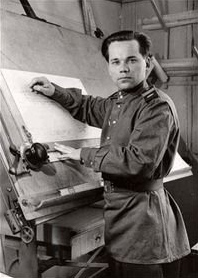
Parece que hay una lección que aprender de los diseñadores de armas. Verdaderos gurús de la moral y la conciencia limpia, estos hombres esconden un espíritu hegeliano y schmitteano.
Una Nueva Visión

El garantismo como una movimiento a favor del Status Quo. En especial las oligarquías antidemocráticas y las fallas de mercado.
–>—>—>—>——-<
Hoy en día, México no ha colocado suficiente espectro en el mercado para garantizar una cobertura masiva de nuevas tecnologías. Nuestras redes de telefonía móvil se están saturando, lo que provoca el estancamiento de los servicios de telefonía móvil que reciben millones de usuarios en el país. Antes de las licitaciones 20 y 21, México contaba con alrededor de 150MHz destinados a servicios móviles, lo que internacionalmente nos coloca muy por debajo no sólo de países más avanzados, sino de aquellos con similar desarrollo como Chile y Argentina. Después de ambos procesos licitatorios, México ha incrementando en 60% su disponibilidad de espectro al pasar a 240 MHz.
Esto se complica. El modelos legal mexicano se enfrento ante la astucia argumentativa de un solo abogado, que presentando controversias en los juzgados de todo el país (a todos los niveles, incluso de paz) creando un enrome compendio de criterios contradictorios que han imposibilitado el avance de la cada vez más necesaria formalización de la modernización en comunicación de nuestro país.
Articulo de Karl Marx sobre la verdadera razón de la guerra de secesión de EUA, publicado en el periódico austriaco de Die Presse de Viena.
–>-SSS-<—
Karl Marx, “Der nordamerikanische Bürgerkrieg,” Die Presse (Wien), Nr. 293, 25. Oktober 1861; English translation: “The North American Civil War,” in Karl Marx and Frederick [sic] Engels, The Civil War in the United States, edited by Richard Enmale, New York, International Publishers, 1937, 2nd ed. 1940, pp. 57-71.

London, October 20, 1861.
For months the leading weekly and daily papers of the London press have been reiterating the same litany on the American Civil War. While they insult the free states of the North, they anxiously defend themselves against the suspicion of sympathizing with the slave states of the South. In fact, they continually write two articles: one article, in which they attack the North, and another article, in which they excuse their attacks on the North. Qui s’excuse s’accuse.
In essence the extenuating arguments read: The war between the North and South is a tariff war. The war is, further, not for any principle, does not touch the question of slavery and in fact turns on Northern lust for sovereignty. Finally, even if justice is on the side of the North , does it not remain a vain endeavor to want to subjugate eight million Anglo-Saxons by force! Would not the separation of the South release the North from all connection with Negro slavery and assure to it, with its twenty million inhabitants and its vast territory, a higher, hitherto scarcely dreamt of, development? Accordingly must not the North welcome secession as a happy event, instead of wanting to put it down by a bloody and futile civil war?
Point by point we will probe the plaidoyer of the English press.
The war between North and South — so runs the first excuse — is a mere tariff war, a war between a protection system and a free trade system, and England naturally stands on the side of free trade. Shall the slaveowner enjoy the fruits of slave labor in their entirety or shall he be cheated of a portion of these by the protectionists of the North? That is the question which is at issue in this war. It was reserved for The Times to make this brilliant discovery. The Economist, The Examiner, The Saturday Review and tutti quanti expounded the theme further. It is characteristic of this discovery that it was made, not in Charleston, but in London. Naturally, in America everyone knew that from 1846 to 1861 a free trade system prevailed, and that Representative Morrill carried his protectionist tariff in Congress only in 1861, after the rebellion had already broken out. Secession, therefore, did not take place because the Morrill tariff had gone through Congress, but, at most, the Morrill tariff went through Congress because secession had taken place. When South Carolina had its first attack of secession in 1831, the protectionist tariff of 1828 served her, to be sure, as a pretext, but also only as a pretext, as is known from a statement of General Jackson. This time, however, the old pretext has in fact not been repeated. In the Secession Congress at Montgomery all reference to the tariff question was avoided, because the cultivation of sugar in Louisiana, one of the most influential Southern states, depends entirely on protection.
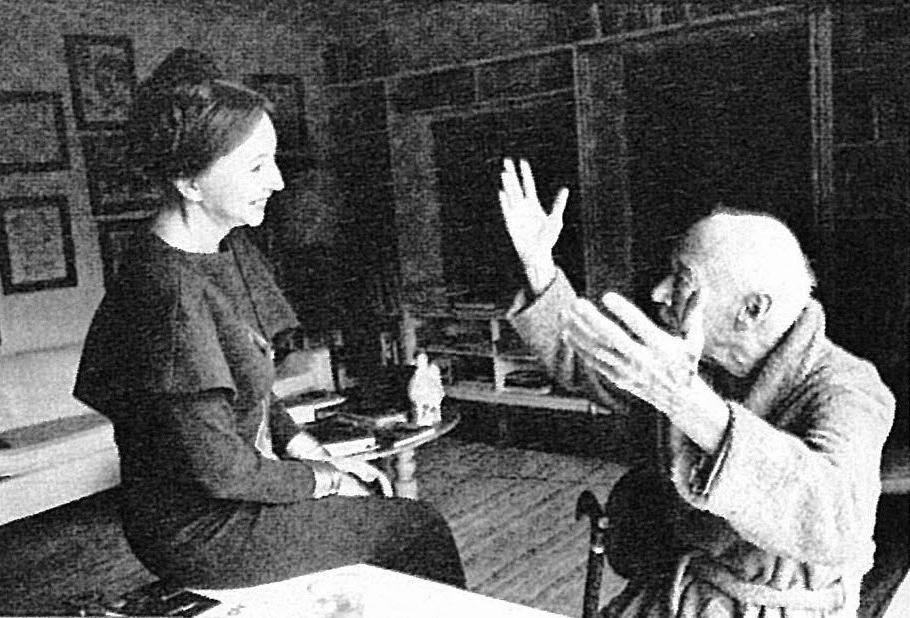
I love learning from the greats how they worked, how they thought of their art/craft, this thing we call writing (such a drab name for an act so often fraught with terror and yet having the power to create ecstasy).
Courtesy of Brain Pickings, here are Henry Miller’s 11 Commandments:
I find (1) and (10) the hardest. It seems as soon as I begin work on one book I can think of at least 2 others I want to write more than the one I happen to be working on.
My favorite is (5), «When you can’t create you can work.» I wonder if Henry Miller ever woke up up feeling like cotton batting had replaced his brains and he just wasn’t up to stringing two coherent words together. It’s strangely comforting to think he may have.
But that’s not all! Here is Henry Miller’s daily schedule:
MORNINGS:
– If groggy, type notes and allocate, as stimulus.
– If in fine fettle, write.
AFTERNOONS:
– Work of section in hand, following plan of section scrupulously. No intrusions, no diversions. Write to finish one section at a time, for good and all.
EVENINGS:
– See friends. Read in cafés.
– Explore unfamiliar sections — on foot if wet, on bicycle if dry.
– Write, if in mood, but only on Minor program.
– Paint if empty or tired.
– Make Notes. Make Charts, Plans. Make corrections of MS.
Note: Allow sufficient time during daylight to make an occasional visit to museums or an occasional sketch or an occasional bike ride. Sketch in cafés and trains and streets. Cut the movies! Library for references once a week.
I think that’s a great schedule. As always, the trick is sticking to it, as Mr. Miller did. I think there’s a lot of truth to the saying, «Success is 90% perspiration, 10% inspiration».
I hope Henry Miller’s schedule/work ethic inspired you to write, it has me!
Cheers, and keep writing.
El Ulises de James Joyce 1922

El Amante de Lady Chatterley de D.H. Lawrence 1928

Viaje al Final de la Noche de Louis-Ferdinand Cèline 1932

Trópico de Cáncer de Henry Miller 1934
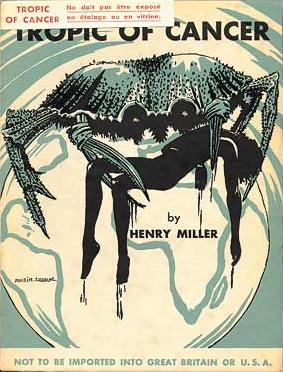
Más en: http://www.flavorwire.com/231804/classic-novels-first-covers?all=1
El secreto de la literatura americana ha sido el mismo que ha utilizado en la política y en la ciencia: una mentalidad priista. Sumar, no restar. La mescal de géneros y audiencias ha logrado que las películas norteamericanas siempre vendaran más , y acaparen más.
Pero esta mentalidad mercantilista no siempre le ha hecho los factores a la estética, ni a la trama, ni a la calidad, y mucho menos a la sorpresa. Estamos en la época en que la línea entre el Premio Nobel y los Best Sellers parece desdibujarse.
Pero el primer libro de la serie A Song of Ice and Fire de George Raymond Richard Martin me sorprendió. He caído, finalmente, bajo el hechizo mercantilista.
Estos creo que son algunos de los puntos donde se sostiene la narrativa de autor.
El escepticismo moral de la Narrativa:
La novela es, antes que nada, una novela postmoderna. No hay una moral clara, y se pueden ver los matices precisamente por la manera en al que se construye la historia. Los diferentes narradores (o POV characters, como suelen llamarse) cuentan la historia desde su perspectiva subjetiva. Los hechos pasan por un matiz estético, anímico y moral antes de que nos sean entregados. Winterfall a través de un niño aristócrata de 7 años.
La estética del medioevo & El anacronismo
El control de la información en un mundo inventado
Estos son los puntos donde se resuelve la habilidad del autor.
Crear vida y tiempo
Las ciudades que describe nos resultan, junto con los personajes y el bagaje de elementos que el lector ya trae a la obra, cobran vida.
Leopardos y Chacales
Los Lannisters y los Starks (Los Lancasters y los Yorks, en la versión histórica original de la Inglaterra en guerra de rosas por los tronos) no son en realidad opuestos. La grandeza de la obra de Martin, con su escepticismo, los matices morales de cada personaje y la carencia de un corro o un narrador objetivo, permiten respirar la ausencia de valores.
Starks y Lannisters son parte de la misma hipocresía. No podemos verlos como opuestos, si no como contrarios. Lo opuesto a las casas reales serían mas en forma de los piratas o las ciudades libres: donde no hay reyes y las estructuras jerárquicas son en realidad horizontales. Podría parecer que los Lannister son los más capitalistas de todos las casas reales. Pero lo que tienen en oro les falta en liberalismo.
El libro de R.R. Martin es Tyrion Lannister. Sin él, la narrativa carecería de valor más allá del entretenimiento mundano de fantásticos. Su esencia rota, pero sólida, permite entre ver lo que la moral postmoderna hubiera hecho en los hombres inteligentes y cínicos. Hombres que antes que nada terminan por desnudar la realidad con su lengua libre de pelos, pero llena de espinas y pus.

Supongo que son lagrimas las que salen de los ojos cuando recuerdo la primera vez que alguien me platico la vida de Ludwig. Creo que fue un libro el que se tomo el tiempo de explicarme todo.
 Aguijón Semántico